UTH neurosurgeons perform complex brain surgeries saving two patients
Get Breaking News on WhatsApp
Follow Kafue Times for real-time news from Kafue, Zambia and beyond — straight to your phone.
Join WhatsApp Channel →UTH neurosurgeons perform complex brain surgeries saving two patients
Neurosurgeons at University Teaching Hospitals have successfully carried out two highly complex brain surgeries, saving the lives of a game ranger and a teenage pupil.
In the first case, a game ranger from Kafue National Park sustained a severe head injury after falling onto a tree stump while fleeing from a snake. He was rushed to the Adult Hospital at UTH in Lusaka in an unconscious state.
Medical scans revealed that the patient had developed both an acute epidural and subdural haematoma in the posterior fossa—a rare and life-threatening condition in which blood accumulates between the skull and the brain’s protective covering, placing critical pressure on vital structures.
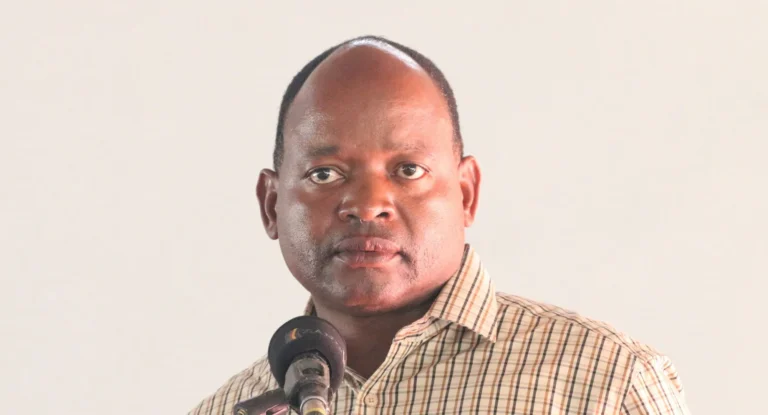
UTH chief neurosurgery resident, Dr Evans Lukonde, told the court that the patient underwent a delicate three-hour surgical procedure known as a sub-occipital craniectomy with haematoma evacuation.
He explained that the operation was particularly challenging due to the location of the bleeding near the torcular herophili, a crucial venous junction where major blood vessels in the brain converge.
“The patient had a fracture and bleeding in a very sensitive area. We managed to control the bleeding, and he is now responding well to treatment,” Dr Lukonde said.
In a separate case, a 16-year-old Grade 12 pupil was admitted to the same facility after experiencing seizures and persistent severe headaches.
Further examination revealed a parafalcine subdural empyema a rare but serious intracranial infection in which pus accumulates along the falx cerebri, the membrane separating the two hemispheres of the brain.
Doctors warned that if left untreated, the condition can rapidly lead to neurological damage and death.
Both patients are reported to be recovering well following the interventions, highlighting the growing capacity of specialised neurosurgical care in Zambia.
About the Author